
As India's electricity demand soars, the power ministry on Tuesday reviewed the power supply situation to ensure 'zero load shedding' during the summer months. The ministry has drafted plans ranging from delaying planned maintenance of thermal power stations to mandatory operations of imported coal-based and gas-based stations till September. In a series of meetings with industry stakeholders, Union Minister for Power, New, and Renewable Energy R K Singh emphasised the importance of adequate planning to avoid situations where one state has surplus power while another state faces shortages.

Key infrastructure sectors -- from railways to power, and from coal to petroleum -- will not only be part of the achievements but promises too, as the BJP fights to get a third term at the Centre.

Trinamool Congress is the second highest recipient of political donations through electoral bonds.

Despite discounts on Russian crude oil - which fell to the lowest since the Ukraine war began - and the rising sanctions, import volumes from the country will remain stable for now or at least till July, said refinery officials. "There is an appetite for Russian crude, and shipments are not expected to taper off beyond this point unless something major happens. "Talks are on, and buying will continue," an official at a major refinery said.
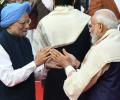
While Narendra Modi spent fewer days abroad than his predecessor -- 275 days versus Dr Singh's 306 - he has travelled more widely than any other Indian PM.

In August 2021, Nick Read, chief executive of Vodafone Plc at the time, did not mince his words while speaking about the India business in an earnings call. Replying to an analyst's question on Vodafone Idea, a venture with the Aditya Birla Group that had piled on huge debts and worrisome losses, Read described it as a highly stressed situation that "they (Vodafone Idea) are trying to navigate... "We, as a group, try to provide them as much practical support as we can, but I want to make it very clear, we are not putting any additional equity into India.''

Telecom services providers have urged the Ministry of Finance to suspend the universal service obligation (USOF) till the existing corpus is exhausted. In their Budget recommendations, they have also pressed for an exemption from the service tax on "assignment of right to use natural resources" and the slashing of Customs duty on telecom equipment to zero. The Cellular Operators Association of India (Coai), which represents private sector telecom operators Reliance Jio, Bharti Airtel, and Vodafone Idea, called for abolishment of USOF levy.

Officials hint the visit could finally see a formal defence industrial road map being adopted by both nations.

'We have informed the government multiple times that the situation in the US and India are different.' 'Here, there will be a 500 MHz gap in the frequencies which will safely allow aviation without interference.'

While the market for satellite broadband currently is small, the potential is large as an estimated 30 per cent of the country does not have reliable terrestrial broadband services.

'Given that the situation is quickly escalating, such attacks will affect the flow of crude in the short term from West Asia' Subhayan Chakraborty and Dhruvaksh Saha report.

'This is not just the IREDA's IPO. It is the success of the ministry of new and renewable energy and of the renewable energy industry.'

Officials said the bill has provided a clear legal basis for spectrum allocation, which till now was allocated or auctioned by the government based on the interpretation of various laws and judgements.

India is expected to ramp up its purchase of crude oil from the United Arab Emirates (UAE) in the coming months following discussions between the two countries on the sidelines of the ongoing COP28 summit in Dubai, multiple sources in the know said. The UAE has historically been India's third-largest source of crude. It has suffered the largest drop in shipments since Indian refiners began to binge on Russian crude in 2022.

The next spectrum auction will be held in late February 2024 and the reserve price for most bands will remain the same as the 2022 auction, department of telecommunications (DoT) officials have said. The government expects operators to go for low bands beginning in 600 megahertz (MHz), licences for many of which are lapsing soon. Back in September 2021, the government had decided that spectrum auctions should be held annually.
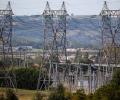
To tackle increasing demand, the Union Ministry of Power has urged central and state public-sector power-generating companies (gencos) and state power and energy departments to pick projects that are undergoing insolvency proceedings. The power ministry is looking at a quicker turnaround of these stressed power plants and enhancing power supply. Increasing demand is pushing states to scout for more power sources. "It is requested that state-owned gencos may be encouraged to participate in the corporate insolvency resolution process (CIRP) of stressed power assets, which are of strategic and commercial significance to the capacity addition plans of the states concerned.

The three-day India Mobile Congress (IMC) will showcase the widening convergence of telecom with new domains, such as semiconductors and deep tech, P Ramakrishna, the forum's chief executive officer, said on Tuesday. With more than 250 global and domestic exhibitors, the seventh edition is expected to draw more than 100,000 visitors this year, he said. There will also be over 5,000 CXO-level delegates and more than 350 speakers.

Keen to capitalise on the growing geopolitical support from African nations after the recently concluded G20 Summit, India is working with the African Union to hold the fourth India-Africa Forum Summit later this year in Kenya's Nairobi, sources said. Prime Minister Narendra Modi is expected to attend the mega meet along with as many as 50 African leaders, they added. First held in New Delhi in 2008, the India-Africa Forum Summit marked India's initial diplomatic efforts to seek a comprehensive partnership with the African bloc of nations as a whole, at a time when China had begun its own outreach.

The limited availability of flexible (flex)-fuel vehicles in the Indian market and the slow rollout of ethanol-blended petrol by oil-marketing companies (OMCs) remain major obstacles to achieving widespread use of biofuels in the transportation sector in India. Recently, two Union ministers have emphasised India's biofuel potential, arguing that it has the capacity and potential to lead a transition towards widespread biofuel adoption. Road Transport Minister Nitin Gadkari signalled that this transition is well underway and urged car manufacturers to quickly adapt and introduce new biofuel-run vehicles, lest the government resort to taxing diesel vehicles.

The first summit in South Asia, it will host the largest delegation of 43 heads of State and government as well as the heads of international organisations.
 © 2026 Rediff.com - Advertise with us - Disclaimer - Privacy Policy - Sitemap - Feedback - About us - Terms of use - Grievances